Settings and Configuration
Settings is four sections, and the split is who a change affects. Account is you alone, Organization is everyone at your agency on every project, This Project is the project named at the top of that section, and Security is your sign-in.
Search Console, Analytics 4, Bing Webmaster Tools and IndexNow all connect from the third section. What Do I Do Next will tell you which of them your project is missing rather than leaving you to check. Agency owners should also read team management, since roles decide which of these cards a colleague can even see.
Your Account and Emails
Account carries your display name and the six emails SEOLinkMap will send you, each one a separate switch. They cover a finished crawl, a finished competitor research report, a finished prospector order, an order an LLM created, an approval going through, and a digest of outreach reminders coming due.
Turning all six off is a reasonable choice if you live in the app, and turning on the three that announce finished orders is the usual setup for anyone who buys research and wants to know when it lands. Mail goes to the address shown on the card, which is the one you sign in with.
Settings Your Agency Shares
Organization holds the things that would look wrong if two people set them differently. Your company name and logo appear on shared LinkMaps and client reports, and on the plans that include white labeling, setting both removes SEOLinkMap branding from what your clients see. Logos upload as PNG, JPG or WebP up to 2MB.
Team chat notifications, on Professional and Agency plans, forward finished crawls, research and audits to Slack, Microsoft Teams, Google Chat, Discord, or any webhook URL you paste in. Only events that did not reach an open SEOLinkMap tab get forwarded, so the channel stays quiet when the team is already watching. Private things - chat messages, calendar reminders - are never posted to a shared channel.
API Keys and Agent Access
Three cards here hand access to something that is not a person, and they are worth understanding separately. An API key is for tools like Zapier or n8n: each key gets a label, a scope of read-only or full access, and an optional expiry date.
The auto-approve switch on a key is the one to think about. It lets that key approve crawls, layout recalculations, research, prospecting, AI visibility prompts and new projects with no manual review, which means handing your spending authority to whatever holds the key.
Webhooks push crawl, research, prospecting and AI visibility events out to those same tools, signed with HMAC-SHA256 so the receiving end can verify the payload came from us. The signing secret lives on that card.
Agent Configuration is separate again, and it is what an MCP agent uses to fetch approval codes. It takes an agent key and a list of allowed IP addresses, one per line, with CIDR ranges accepted. The Agentic Approval API guide covers what the agent does with them.
Integrations for This Project
The third section applies to one project, and its heading names which. Brand terms come first: a comma-separated list of your company name and its common misspellings, used to split Search Console queries into branded and non-branded in reports. Plain words work better than punctuation here.
Search Console supplies query and indexing data, Analytics supplies traffic and conversions, and each is a connect step followed by picking the property that matches this project. Bing Webmaster Tools sits alongside them for query and indexing data from Bing.
IndexNow tells search engines the moment a page changes instead of waiting for the next crawl. The card carries your key and shows a badge reading enabled or disabled, which is the fastest way to confirm it is actually on.
Password and Two-Factor Login
Security holds your password, two-factor authentication, and this browser. Passwords are at least eight characters, and you land back on the dashboard after changing one. If you signed in with a temporary password, changing it is the first thing the app will let you do.
Two-factor adds a code from an authenticator app at sign-in, so a stolen password is not enough on its own. An agency owner can require it for everyone in the organization, and when that is on, nobody can turn their own off.
The last card is about the browser you are using now. "Remember me" keeps you signed in and skips the login screen; clearing it means a fresh login next time.
Reading the Two Color Scales
Colors in a LinkMap come in two scales, and the toggle for them is in the visualization itself rather than here. Look for "Use accessible color scale" in the HUD in the top-right corner of the map.
The standard scale runs blue to red.
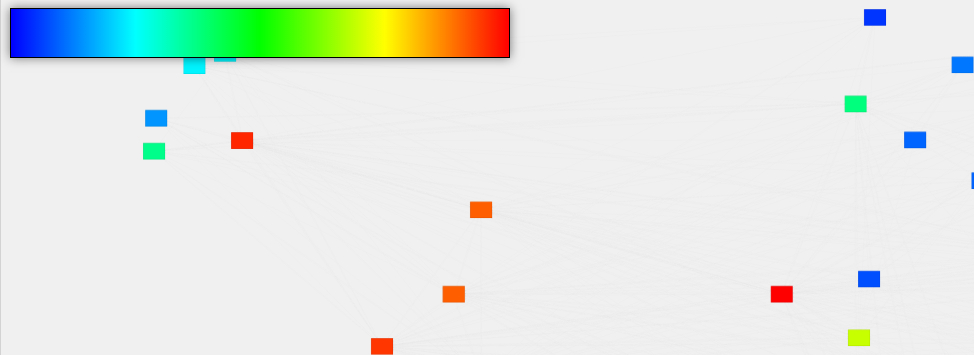
The accessible scale is viridis, dark purple to bright yellow. It stays readable for the most common forms of color vision deficiency because it climbs in brightness the whole way rather than only changing hue, so the order of the colors survives even when two of them look alike.
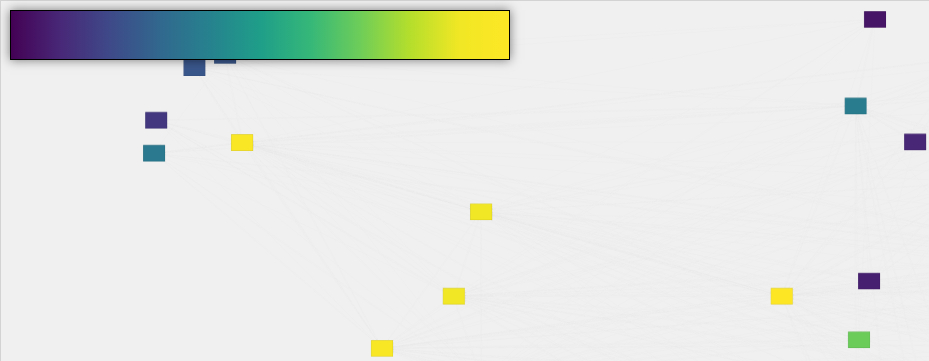
Either scale is showing you the same numbers, so nothing about your site structure changes when you switch. The map opens on the standard scale each time, so flip the toggle when you need the other one. Pick the one you can read, and use the accessible scale in client presentations where you cannot know who is in the room.
What Does the Math Say
About Your Site?
Finding out is free and takes minutes.